


General principles of therapy

Session
The first 1-3 sessions are a consultation, during which both parties have the opportunity to get to know each other and decide on further cooperation.
Duration and fee
The session lasts 50 minutes and is subject to payment in accordance with the applicable price list, two days in advance in the case of online sessions or at the end of the meeting in the case of face to face meetings.
Confidentiality
As a therapist, I am obliged to respect the principle of confidentiality, which means that what we talk about during the session, as well as the fact that someone attends psychotherapy, are confidential. Under the law, exceptions to this rule are situations when someone's health or life is at risk or in the case of a court exemption from professional secrecy.
Patient details
When cooperating with other specialists (e.g a psychiatrist), I provide only necessary information, the disclosure of which serves the treatment process - always with the prior consent of the people undergoing therapy or at their request. As a psychotherapist, I am obliged to undergo regular clinical supervision. Supervision, which is also subject to the principle of confidentiality, serves to control and improve the quality of my work.
Ending
The last stage of psychotherapy, proper ending, is an important element of the therapeutic process, therefore at least one summary meeting is recommended.
Form of session
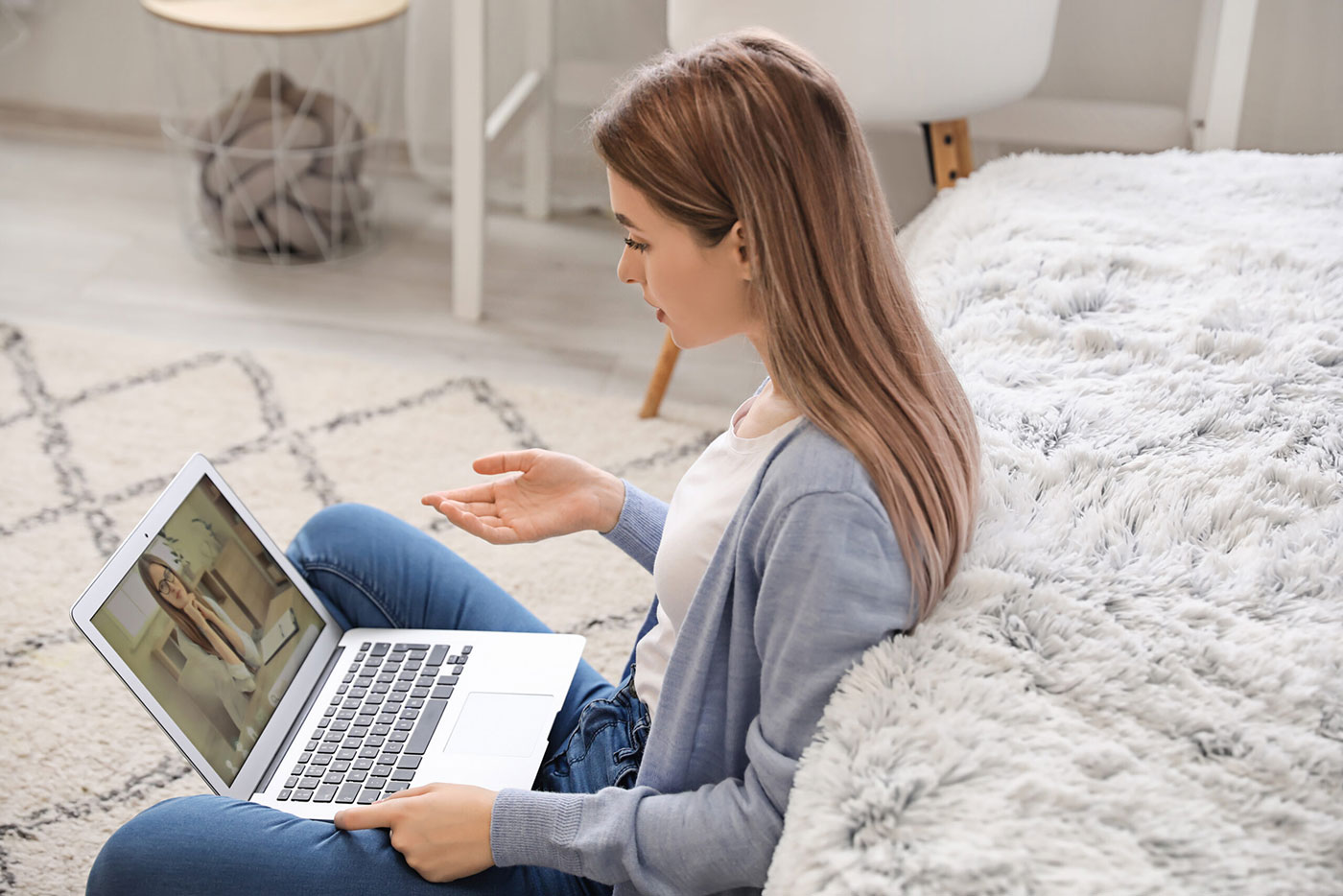
Online therapy
Face to face therapy
Walk and talk therapy
Initially, we conduct sessions online, and if the need arises, e.g. to conduct joint experiments aimed at changing unfavorable thinking, stagnant patterns and dysfunctional behavior, we can meet at the office in Gdynia. For those with attention deficits or who prefer to talk while moving outdoors, I also offer cognitive-behavioral sessions in walk and talk therapy mode in Gdynia and Sopot. A session in either modality lasts 50 minutes and usually takes place once a week – which is recommended in clinical studies as the most beneficial frequency.
In the course of longer therapy, sessions are also available in Gdynia or London, by prior arrangement, at the home or workplace of the person in therapy for observation and in-depth analysis of reactions (thoughts, emotions, behavior) and their interpretation.
In my career, I have conducted therapy in a traditional in-office mode, as well as online via instant messaging services such as Zoom, Teams, Skype, WhatsApp, and by phone with people with disabilities who do not have access to the Internet. Being initially accustomed to conducting therapy at the office in the traditional style, I was not convinced at first that online therapy would be as effective. During the pandemic, we were somehow forced to conduct all sessions online and by phone, and while phone-only therapy presents many difficulties in my opinion, online therapy is so accessible and helpful that it shows equal effectiveness as in-office therapy. This is not just my opinion, but is also confirmed by numerous clinical studies. The advantage of online therapy is that it saves time for the patient, who doesn’t have to commute to a therapist for each session, as well as the ability to keep attending therapy a secret, which can be important for those facing an environment that stigmatizes people with emotional problems or mental disorders. Online sessions are also a big help for those suffering from mobility problems, disorders in which they feel anxious about leaving home, and those living far from urban centers and the nearest therapists.
*Venturo-Conerly, Katherine E., et al. “Effectiveness of youth psychotherapy delivered remotely: A meta-analysis.” American Psychologist 77.1 (2022): 71.
*Weightman, Michael. “Digital psychotherapy as an effective and timely treatment option for depression and anxiety disorders: Implications for rural and remote practice.” Journal of international medical research 48.6 (2020): 0300060520928686.
Therapeutic process

In my practice, I try to tailor treatment methods not only to the mental disorder in question, but especially to the preferences of the person in therapy. Educated in the trend of humanistic and patient-centered therapy, created by Carl Rogers, I believe that without tailoring the therapeutic process to the individual, good results cannot be achieved, the optimum psyche, or the optimal state of functioning of our psyche, cannot be reached. Therefore, at the beginning of the therapeutic process, we decide together what we will focus on in the following weeks or months. Together we create a map of goals and determine the next steps of the journey. It is only up to you what we will work on. On improving communication in a relationship, treating depression, bereavement and the difficult emotions associated with it, changing career paths, treating trauma? Regardless of the reason you start therapy, the goal is usually similar – to improve quality of life, functioning, to change thinking and behavior, and for this, as an experienced CBT therapist, I have excellent tools.
At each individual session we check your mental state. Before the session, I will ask you to fill out questionnaires about your current mood, which we will discuss. We then designate what we want to discuss during the session and how much time we allocate to each topic. We do this so that we don’t stray off the beaten track and work to improve your well-being. In this, of course, we are both very flexible and attentive to your needs at the time. If you were working on the aforementioned OCD, but something very unpleasant happened to you last week that disrupted your functioning, we won’t stick to the plan, no worries. At the end of the session, we usually summarize the things we’ve discussed and set challenges for the coming week that you want to address in order to achieve optimum psyche.
*Venturo-Conerly, Katherine E., et al. “Effectiveness of youth psychotherapy delivered remotely: A meta-analysis.” American Psychologist 77.1 (2022): 71.
*Weightman, Michael. “Digital psychotherapy as an effective and timely treatment option for depression and anxiety disorders: Implications for rural and remote practice.” Journal of international medical research 48.6 (2020): 0300060520928686.
Do you want to improve your mental state?
Are you keen to work on changing your thinking? Do you dream of regaining control over your emotions? Contact me and let’s talk about how I can help you achieve balance and mental well-being.